Category: Communication and Relationships

The Future of Technology in Senior Care by Intel and GE

The Future of Technology in Senior Care

Byline: Shannon McIntyre, Communications Manager, Intel-GE Care Innovations


Today, we stand at the precipice of opportunity.  We have spent centuries treating people’s health only at times of crisis, relying exclusively on hospitals and clinics to manage care, excluding family caregivers from the heart of healthcare coordination where they belong.  We have ignored the importance that wellness and social connectivity can play in keeping a population healthy and happy.  We have denied the role that homes and communities can – and should – play in our overall healthcare system.


There are numerous studies out there that reveal the importance of keeping older adults connected with friends and loved ones.  According to the Public Library of Science Medicine, loneliness, as a health risk factor, is twice as detrimental as being obese, and equal to the risk of smoking cigarettes and alcoholism.[1] Less frequent participation in social activities is associated with a more rapid rate of motor decline in old age.[2] And over an average of five years, seniors who were the most socially active experienced only one-fourth the rate of cognitive decline compared to those with the lowest levels of social activity.[3]


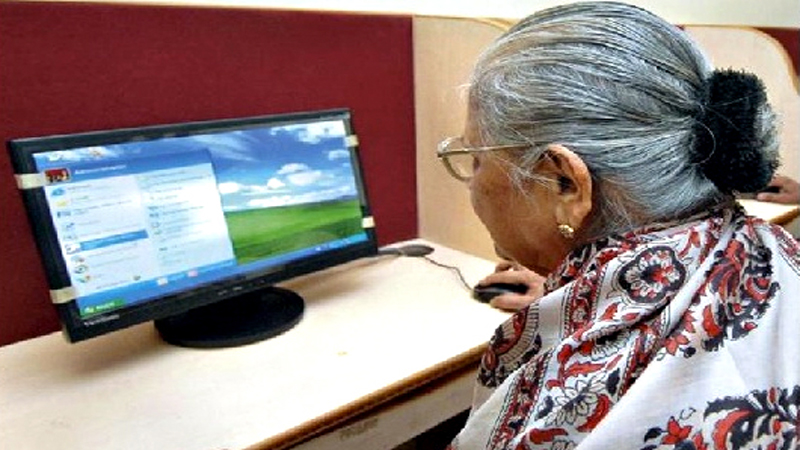
Technology should be harnessed to give people confidence to live independently, wherever they want to call home.  It has the potential to connect millions of people and build relationships that never could have been made before.  We see this already through well-established technology systems such as Facebook, Skype, YouTube, Twitter, and dozens more – yet little emphasis has been made on how similar programs can help seniors overcome the loneliness and isolation that so many of them experience.


One example of a solution that was developed specifically to address this need is Intel-GE Care Innovations™ Connect, a new solution from the joint venture between GE and Intel Corporation.  Care Innovations™ Connect is a new wellness communications tool and social networking hub designed to address social isolation in older adults.  It includes an easy-to-use digital device for the senior’s residence that offers wellness surveys that communicate back to professional caregivers, brain fitness games (e.g. trivia game, card matching game), medication compliance reminders, residential community information, and simple social networking tools.


Connect is based on a decade of senior focused research and has been rigorously user tested with seniors and caregivers.  For seniors, personalization, a friendly touch screen with large icons and text helps them quickly integrate Connect into their daily routines.  The system also includes an online interface for the professional caregiver to securely access their residents’ wellness data, enabling them to respond immediately to issues.


Care Innovations also offers a variety of other tools to help seniors live independently: the Care Innovations™ Guide, a next-generation remote health management solution that connects patients and healthcare professionals; GE QuietCare®, an advanced motion sensor technology that learns the daily living patterns of senior community residents; and the Intel® Reader, a mobile device that transforms printed text to the spoken word for those with reading-based disabilities or impaired vision.


At the heart of all these initiatives is the importance of supporting a spectrum of healthy living from wellness and independence on-the-go to managing serious chronic illnesses.  Aging must be viewed in a more positive light, and we have the responsibility to support new innovations and solutions that can help support these great generations.


Copyright ©2011 Intel-GE Care Innovations LLC. All rights reserved.  Care Innovations and the Care Innovations logo are trademarks of Intel-GE Care Innovations LLC in the United States and other countries. QuietCare is a registered trademark of Intel-GE Care Innovations LLC.  Intel and the Intel corporate logo are trademarks of Intel Corporation in the United States and other countries, used under license.  GE and the GE Monogram are trademarks of General Electric Company in the United States and other countries, used under license.  *All other third-party trademarks are the properties of their respective owners.  Any use of the trademarks of Intel-GE Care Innovations LLC (and its related companies) is prohibited without express written permission.


[3] Journal of the International Neuropsychological Society (http://tinyurl.com/3szfzkr)


Senior Nutrition and Mealtime – Video

Blog Post by Home Instead Senior Care offices in the Portland Metro Area

In this video, the first of a five-part series, Certified Senior Advisor Mary Alexander, from Home Instead Senior Care®, discusses senior nutrition and the benefits of mealtime companionship. This series emphasizes important nutritional considerations for seniors, highlights some of the challenges seniors face when trying to maintain a healthy diet, and suggests ways to make mealtime more enjoyable.

.

Homemade Memories – Video

Blog Post by Mike Brunt

A mother and her daughter talk about a family recipe that not only followed them from holidays to birthdays, but brought them together to share memories with the ones they love.

Make Mom’s Recipe a Winner

Blog Post by Home Instead Senior Care offices in the Portland Metro Area

Mom’s spaghetti and meatballs were always a hit at family dinners. Everyone wanted the recipe. Mom gladly shared it, along with the story of how her own mother had created the dish quite by accident when she added a wrong ingredient.

Many family recipes come with a great story. Now here’s the chance to share yours. If you’re a family caregiver, get your mom or dad’s cookbook and pull out that favorite family recipe to enter in the Homemade MemoriesSM Recipe Contest. Then tell us in a short story what makes this dish so special. Go to MealsAndCompanionship.com to learn more about the contest and how your recipe could be a winner. The contest runs from July 15 to September 15, 2011.


(Entry Submissions: July 15 – September 15; Voting Occurs: September 16 – October 7th).

Selected recipes and stories will be online as well as in the Homemade MemoriesSM Cookbook that will be available for purchase prior to the 2011 holiday season. Proceeds will go to the non-profit Home Instead Senior Care® Foundation to benefit North American seniors.

The contest is part of the Craving Companionship program, launched to help seniors thrive by staying connected socially and eating more nutritiously. Research conducted for the Home Instead Senior Care network reveals that the biggest mealtime challenge for older people who live alone is lack of the shared family experience including companionship.

What’s more, an overwhelming majority of seniors (85 percent) say that having someone to share their meals makes mealtimes more satisfying for them, according to research. In addition, nearly one-half (48 percent) say their mealtimes are more satisfying if they have someone prepare their meals.

If you are facing caregiving challenges in your family, we want to help. Please contact your local Home Instead Senior Care office for more of these resources or to schedule a no-cost in-home consultation to learn more about how we can help you and your parents. For Home Instead in Washington County, Oregon, please call 503-530-1527 or visit our interactive online brochure.


Book: “Moments This Good, The Softer Side of Alzheimer’s”

Book Recommendation by Mike Brunt

Bonnie Nester’s latest book, ”Moments this Good: The Softer Side of Alzheimer’s,” is a memoir of hope and love.  Join Bonnie as she walks beside her mother through the tangled trails of Alzheimer’s Disease. In “Moments this Good,” Bonnie shares her experiences and insights in a tender and a lovingly humorous way. This is an uplifting, encouraging read to guide others who are losing loved ones to this debilitating disease. Moments This Good gives back the humanity and dignity that Alzheimer’s tries to steal. 

A Portion of the proceeds for this book are donated to the Alzheimer’s Association.

If you would like to purchase a signed and/or personalized copy of any of her books, contact her directly.  She also welcomes any comments – she loves hearing from fellow readers: bonnie@bonnienester.com.

Publication Date: May 2008
ISBN: 9780980244601
208 Pages
26 Black & White Photos
Golden Quill Publishing

Order “Moments this Good”

Read an Excerpt
Bonnie lives in Sherwood, Oregon and is a supporter of Senior Provider Information Network. Learn more about Bonnie and her work at http://www.bonnienester.com/.

New Toolkit Helps Track Senior Medications

Blog Post by Home Instead Senior Care offices in the Portland Metro Area

Proper Medication Tracking is Vital to Keeping Seniors Healthy
You’ve just walked out of your mother’s latest doctor’s appointment and your head is spinning. The doctor wants to change the dosage on two medications, stop a third, and start a new fourth medication. Some of the medications need to be taken on an empty stomach and some with food. Some medicines your mother should take twice a day and some just in the evening. Keeping it all straight is making your head ache.
Even more importantly, however, is what can happen if you, and your mother, don’t track her medications properly. On average, seniors ages 85 and older take 34 prescriptions, including refills, per year, according to the American Society of Consultant Pharmacists (ASCP). And adverse drug reactions (ADRs) or noncompliance are responsible for 28 percent of all hospitalizations of the elderly, the organization reports.

The sheer volume of medications that most seniors are taking has the potential to create the perfect storm. Medication-related problems can cause, aggravate or contribute to common and costly geriatric problems including:

  • Depression

  • Dizziness

  • Falls

  • Incontinence

  • Insomnia

  • Loss of coordination

  • Malnutrition/dehydration

  • Memory loss

  • Psychiatric problems


Tools and Resources for Family Caregivers
Pill organizers can help track multiple prescriptions. So can the assistance of a family or professional caregiver. The Home Instead Senior Care® network offers many resources to help family caregivers stay on top of their loved ones’ medical situations.

In addition to in-home care services, Home Instead Senior Care has worked with Humana Points of Caregiving® to develop an information management toolkit and the Caring for Your Parents: Senior Emergency KitSM website to help you track medications and other important information regarding your senior loved ones’ health. This toolkit includes checklists and worksheets for medications, conditions, allergies, doctors, health advisors and important documents.

If you are facing caregiving challenges in your family, we want to help. Please contact your local Home Instead Senior Care office for more of these resources or to schedule a no-cost in-home consultation to learn more about how we can help you and your parents.

Most Baby Boomers Lack A Plan To Care For Parents

By Janice Lloyd, USA Today, June 17, 2011
Link to Original Article

A majority of Baby Boomers say they are likely to become caregivers for their parents, but only half can name any medications their parents take, a new survey shows.

The survey of 600 adults ages 45 to 65, conducted for the Home Instead Senior Care network, also found:

  • 31% don’t know how many medications their parents take.
  • 34% don’t know whether their parents have a safe deposit box or where the key is.
  • 36% don’t know where their parents’ financial information is located.


“The majority of caregivers we work with have done no advance planning,” says Jeff Huber, president of Home Instead Senior Care, a company that provides non-medical care services. “It is not important until it’s urgent. So much stress and uncertainty down the road can be prevented.

“Lack of planning can lead to serious complications when decisions need to be made quickly, says palliative care nurse practitioner Mimi Mahon, an associate professor at George Mason University in Virginia. “It’s vitally important to plan ahead and have these conversations with parents, or families can act out of fear and make mistakes when emergencies arise.

“Prescription drugs are of particular concern. In the survey, 49% couldn’t name a single drug their parents took. Ask parents about their medications and, if necessary, do research, experts say. Find out the dose, what it’s for, who prescribed it and why. People 65 and older account for about a third of all medications prescribed in the U.S., according to the National Institutes of Health, and older patients are more likely to have long-term and multiple prescriptions, which could lead to unintentional misuse.

“It’s kind of a never-ending process for caregivers,” says Sandy Markwood, head of the National Association of Area Agencies on Aging, part of the Department of Health and Human Services. “It gets further complicated when there is more than the family practitioner. A parent might have several specialists. It’s a lot for a caretaker to keep up.”

Markwood says the Administration on Aging, also under HHS, has been encouraging better record-keeping by seniors and stronger communication between seniors and caretakers since Hurricane Katrina. “Then you had a situation when seniors were evacuated without their medications and no one knew what medications they were on,” Markwood says. “Doctors had to start from scratch.”

One must-have answer for caretakers: What drugs can parents go without and which ones must be taken on schedule. For instance, blood pressure and anti-depressant medications cannot be missed, Mahon says.

The bottom line, she says, is being a staunch advocate for your parents’ health care starts with “having conversations and putting plans in place.”


Resources are available online

 The Home Instead Senior Care network’s Senior Emergency Kit is free and available to download (caregiverstress.com). It includes sheets for listing contacts and phone numbers, medications, allergies and conditions.

Senior Emergency Kit

Blog Post by Home Instead Senior Care offices in the Portland Metro Area

Research conducted for the Home Instead Senior Care network® tells a striking tale of how family caregivers do not feel they are prepared for a senior care emergency.

Less than half (47 percent) say they are knowledgeable about their parents’ medical histories. And approximately half (49 percent) are not able to name any of their parents’ medications. Furthermore, 36 percent of those future caregivers don’t know where their seniors’ financial information is located.

What are your thoughts about how family members of aging loved ones can prepare themselves for a senior care emergency?

Helpful Resources:
Use the web sites below to help get yourself prepared for that emergency phone call that so many adult children and family caregivers dread.

www.SeniorEmergencyKit.com

www.healthrecordresources.com

What is Geriatric Care Management?

Blog Post by Sandra Hedges, Owner of S.A.G.E. Care Management, LLC

WHAT IS GERIATRIC CARE MANAGEMENT?

Geriatric Care Management encompasses a broad range of services provided by qualified professionals who specialize in understanding the needs of elders and their families. A Geriatric Care Manager (GCM) provides support, guidance, and solutions to meet those needs. Professional Geriatric Care Managers assist elders and their families through the maze of issues that come up during the transitions of aging. Geriatric Care Managers come from a variety of professional disciplines including Licensed Clinical Social Work, Nursing, and Physical and Occupational Therapy. They must be licensed in their fields as well as by the National Association of Professional Geriatric Care Managers (NAPGCM).

One of the most important functions of GCMs is to provide comprehensive and objective assessments that assist elders and their family members in making decisions. The GCM focuses on maintaining the well-being, independence, and dignity of elders while optimizing safety. GCMs specialize not only in meeting the needs of elders, but also in understanding and working within the environment in which the elder exists (such as high conflict families, challenging mental health problems, etc.).

GCMs are trained advocates for elders and serve the primary functions of assessing needs, planning care, coordinating services, and monitoring health. Following is a list of specific duties and roles of the Geriatric Care Manager:

  • Provide crisis intervention
  • Serve as a liaison with other professionals and coordinate a multi-disciplinary team.
  • Facilitate communication with family members who live far away and be a mediator in high-conflict family situations
  • Be the “eyes and ears” at medical appointments
  • Organize details of returning home (enhanced discharge planning)
  • Provide objective home evaluations 
  • Create comprehensive care plans to reduce crises and re-hospitalizations
  • Reduce anxiety for patients and their families
  • Prevent unnecessary hospitalizations
  • Evaluate safety needs in the home and implement changes
  • Locate and arrange qualified in-home caregivers to meet individual needs
  • Provide on-going oversight and management of home care assistance
  • Arrange household management tasks
  • Help with bill organization and payment
  • Counsel during loss and transitions
  • Assist with end of life planning and decision making
  • Organize record keeping
  • Assist with coordination of down sizing / relocation


Choosing the appropriate GCM for your family is all about finding the right “fit.” All GCM’s have different backgrounds, specialties and personalities. This is a person you will be working closely with, so you’ll want to select wisely. The professional management a GCM provides allows adult children and other family members to spend quality time with their senior loved ones. Also, the GCM takes pressure off of families by moderating interpersonal and communication issues. When a smooth pattern is established, the GCM can monitor the situation from the background and be ready to directly re-engage as the situation requires. 

Assisting honored seniors on the path of aging involves many bumps and turns along the way. With a process this fluid, a GCM can be an indispensable partner on the journey – one who can help preserve positive family relations during the elder’s final years and beyond. 

If you are interested in learning more about Geriatric Care Management, please visit the websites below or contact S.A.G.E. Care Management at 503-688-3866 or shedges@sage-gcm.com.

Resources:
www.sage-gcm.com
www.caremanager.org

About Sandra
Sandra Hedges is a Board Licensed Clinical Social Worker and Certified Professional Geriatric Care Manager. She is the owner of S.A.G.E. Care Management, LLC. Sandra is originally from Hillsboro, OR and spent the last 7 years on the East Coast. She attended New York University to earn her Masters of Social Work and moved up to Boson to work as the Director of Geriatric Care Management for Overlook C.A.R.E. She is happy to be back in Hillsboro near her family and to provide Geriatric Care Management services for her community.

Advice for Family Caregivers with Feelings of Resentment

Blog Post by Dr. Amy D’Aprix – March 28, 2011

Question: 

My mom is in a memory care unit 30 minutes away. I make plans to see her two to three times a week. The facility is wonderful and takes good care of her. Many times, when I leave, I feel resentful for her taking so much of my time. I am the primary care person for her. My sister and brother support me but live out of state and cannot get here to see her often. Is this feeling of resentment normal?

Dr.  Amy: 

In my experience, caregivers feel a wide range of emotions. Love, feelings of giving back, gratitude for the opportunity to provide care—as well as anger, resentment, and guilt. All of these feelings are normal.

If your resentment is tied to the number for visits, maybe you have too much on the go and need some help. Are two to three visits a week too much? Perhaps you can do fewer. Or maybe you can hire a home care worker to visit mom once a week, in your place. That would lessen your load. Home Instead Senior Care CAREGivers perform this service. They can go to the memory care facility, keep your mom company and also take care of errands she may have.

At some point, most caregivers need a break from their responsibilities. You might want to hire someone to take over your visiting responsibilities for a week or two. You might also plan to take a break when your brother and sister come to town. Or both!  

If you are feeling a lot of resentment, you may want to get help. As caregivers, each of us has a unique relationship with the person we’re caring for. Often, our feelings today are colored by what happened in the past. If you think this is true for you, a support group or counsellor can help you sort out your feelings and feel more at peace.

More advice from Dr. Amy

Mom’s Favorite? Research Reveals Birth Order in Caregiving

Blog Post by Mike Brunt

Did Mom Like You Best? Research Reveals Birth Order Role in Caregiving

“Mom always liked you best.” It was a popular line from the 1960s comedy duo the “Smothers Brothers”.

The truth is, birth order and parental preferences do impact caregiving situations in families with multiple siblings. Research conducted by Cornell University gerontologist Karl Pillemer found that mothers ages 65 to 75 in the Boston area were perfectly willing to name favorites among their children.

Pillemer noted that parental favoritism is part of the family landscape, with mothers often expressing preferences and identifying one to whom they feel the most emotionally close and one with whom they have the most conflict.

More

Assessing Financial and Emotional Effects of Inter-Generational Living

Blog Post by Home Instead Senior Care offices in the Portland Metro Area

Why Families Are Living Together
The reasons different generations decide to live together are as varied as the families themselves, but three factors often come into play:

  • Shared Caregiving: Families are coming together to share caregiving duties — either an elderly loved one needs care or an older adult is providing care to his or her grandchildren.
  • Physical or Emotional Support: Seniors may feel the need for the physical or emotional support of extended family after losing a spouse, dealing with health issues, or having problems maintaining their property.
  • Finances: The economy is affecting everyone, especially seniors living on fixed incomes. Moving in with family can sometimes save money on food, utilities, and other essentials.

Whether your senior loved one should live with you or stay in his or her own home is an emotionally charged decision. But it’s important to understand both the financial and emotional impact, as well as some of the options available to you.

Home Instead Senior Care and Adriane Berg, author of more than 13 books on personal finance and a founder of the National Academy of Elder Law Attorneys, have combined their experience to create the Too Close For Comfort?® calculator. This tool uses 15 questions to walk you through basic budget items, major issues, and some often-overlooked matters that could affect your decision.

More about having aging parents live with you in your home.

Having “The Talk” With Mom and Dad

Blog Post by Mike Brunt
Article from The Wall Street Journal, February 23, 2011

When the time came for Kathy Peel’s mother and father to consider moving into an assisted-living facility, Ms. Peel tried reasoning with them, citing examples of friends who were happy they had made the move.
 
When that didn’t work, she took a business approach. Ms. Peel and her husband Bill convened a conference at her parents’ kitchen table in Memphis and helped them write a three-page “strategic plan.” Her parents, Morris and Kathryn Weeks —both retired businesspeople in their late 80s—joined in, talking about their goals and helping list dozens of pros and cons to staying in their home.

While many seniors do fine at home, others need long-term care facilities or a home aide. It’s good to start such conversations early, says Paul Hogan, chairman of Omaha-based Home Instead Senior Care, which provides in-home caregivers. A good principle is “the 40-70 rule; if you are 40, or your parents are 70, it’s time to start talking,” he says.

Link to Full Article

I feel Mom lives too far away. Should I encourage her to move?

Blog Post by Mike Brunt
Full Article Online – Ask Dr. Amy

I don’t think it’s good for my mom to be living alone so far away. How can I convince her to move?

Question: My mother has been living alone since my father died. She is in the house they both lived in for 40 years. I don’t think it is good for her to be living alone and have suggested that she move nearer to me and my wife. We live about 3 hours away. I am not having much luck with this. How can I convince her to move?

Dr. Amy: I know that you would like your mother to move closer because you care about her and are concerned about being so far away from her since your father died. However, having a parent move from his or her home and the community they know is not always best. Before encouraging such a move there are things that both you and your mother should consider:

Full Article Online – Ask Dr. Amy

Home Instead Featured on ABC’s World News with Diane Sawyer

Blog Post by Mike Brunt
From ABC News, February 4, 2011 

Home Instead Senior Care is featured on ABC’s World News with Diane Sawyer in a series titled, “Families on the Brink: What to Do About Mom and Dad…?” The segment identifies some of the challenges adults face when caring for their aging parents, and suggests caregiving services from Home Instead as a potential solution.

Sue and Skip Hollcroft are two of the more than 20 million people struggling to take care of their children and their aging parents.

They said the balancing act was tough. “Often we have to split our time. You’ve got the guilt. You know you get one chance, one shot at these high school things with your child,” Sue Hollcroft said. “You’re constantly running from your job to try to take care of Dad, to try to make it to a wrestling match. Things like that. So it is difficult.”

Read the full article on ABCNews.com

The Dynamics of Sibling Caregiving (Video)

Blog Post by Home Instead Senior Care offices in the Portland Metro Area

Sharing isn’t always easy for brothers and sisters who grow up under the same roof. Divvying up the wealth of toys, bedrooms or vehicles may have been a challenge at your house, and sharing the daily household chores could have led to family conflict as well. Some things never change.

One Family’s Story—The Final Journey

According to research conducted for the Home Instead Senior Care® network, sharing the care of elderly parents can be as much of a challenge for adult siblings. Consider these statistics:

“Senior caregiving can either bring families together or cause brother and sister conflict,” says sibling relationships expert Ingrid Connidis, Ph.D., from the University of Western Ontario. “In some cases it can do both. These issues can be very emotional.” Connidis has partnered with Home Instead Senior Care to develop the 50-50 Rule℠ public education program to help siblings deal with the many issues of caring for a parent and to improve caregiver communication.

Link to Key Findings and Further Info

The 50-50 Rule: Solving Family Conflict

The 50/50 Rule: Solving Conflict with Families Caring for SeniorsBlog Post by Home Instead Senior Care offices in the Portland Metro Area

You may not have seen eye-to-eye with your brothers and sisters when you were growing up. Some things, it seems, have not changed. Now that you’re caring for elderly parents, the issues of aging could put you at odds with your siblings.

That’s why the Home Instead Senior Care® network developed the 50-50 Rule program. The 50-50 Rule refers to the average age (50) when siblings are caring for their parents as well as the need for brothers and sisters to share the care planning responsibility 50-50.

Research conducted for the organization reveals that an inability to work together often leads to one sibling becoming responsible for the bulk of caregiving in 43 percent of families. And that can result in the deterioration of relationships with brothers and sisters. If you’re 50, have siblings and are assisting with the care of seniors, it’s time to develop a plan.

The 50-50 Rule public education campaign can help. At the heart of the campaign is a 50-50 Rule guide of family situations that will provide practical advice from an expert to brothers and sisters struggling with any number of topics from trying to divide care and work better as a team to dealing with end-of-life issues.

This program can help you answer such questions as:

Should you and your sister divide the caregiving load and, if so, what are the best ways to do that?

Does your brother disagree with your dad’s decision to stay home and how can you build consensus?

How will you resolve the conflict over family inheritance?

The guide and website, SolvingFamilyConflict.com, will offer a variety of additional tips and resources for siblings, all backed by original company research. We would be happy to share more information about how home care can provide a welcome respite for family caregivers and ease the strain on sibling relationships.

Please contact your local Home Instead Senior Care office for more information or to schedule a no-cost in-home consultation to learn more about how we can help you and your parents.

Question to Boomers…How Will You Live?

Blog Post by Home Instead Senior Care offices in the Portland Metro Area

Changing the Face of Aging

howwillyoulive.org

As a senior-care professional, you’ve witnessed firsthand the many challenges of aging. But those “golden” years likely will look vastly different for the generations that will be joining the ranks of seniors in the years to come.

After all, the generation ready to embark on their senior years has been writing their own story since day one. They are the generation that led the charge to change the way society looked at so many things from civil and women’s rights to space exploration to technology.

Generations before them may have faced their senior years with apprehension, but not so for those trail-blazers waiting to join the senior ranks. They’ve changed everything else about our world.  Now they have the opportunity to change the face of aging. Perhaps you are among them or even younger. Regardless of your age, here’s your chance to tell it like it is, or like it should be. The Home Instead Senior Care® network wants to help you spread the word.

We invite you to participate and share the conversations that will make a difference in how aging is perceived for your generation and those you care about. Go to HowWillYouLive.org and tell us how you will change the way you age.

Based on your experience working with older adults, what do you hope for as you move into those “golden” years?  A cure for Alzheimer’s disease? To work until you die? To vacation until you die? To look great? To remain at home with a good quality of life? We want to know what you think.

The Home Instead Senior Care network produced and just released a video that will provide you and others in your generation the opportunity to share ideas about aging and how you see yourself growing older.

Changing the perception of aging is important to a senior-care leader such as Home Instead Senior Care. That’s because Home Instead values the contributions that older adults have made to our world. The organization also knows that planning for their senior years is an important key to aging independently.

HowWillYouLive.org

Six Things to Look for When Visiting Elderly Parents

Blog Post by Lynne Coon, MS

If you live far away from your aging parents, the holiday season is often the one time you may see them all year. Enjoy your visit and use the opportunity to check to see how they’re coping.

1. The condition of your mother and father’s home. If things don’t look clean or you see stacks of paperwork, magazines, or other stuff sitting around this may be a sign that they’re not keeping up. Ask them how they’re doing. It might be a good time to explore whether they could use a housecleaner or are ready to move to a smaller living space.

2. Food in cupboards, refrigerator and freezer. How much food is in the cupboards and refrigerator? Are things outdated? Is the freezer full of frozen dinners? Food preparation is often one of the first things to fall by the wayside for an older adult.

3. Covert messages from friends and neighbors. If you have an opportunity to speak with your parents’ close friends and neighbors, listen closely for anything they may be trying to communicate. They may be torn between not wanting to meddle and feeling concerned so they may not give you direct information. If you suspect something is different about your parents ask friends and neighbors if they think anything is different. They may be looking to you for a signal that it’s okay to share their concerns.

4. How your parents are in social situations. Are they happy, present in the conversation, aware of what’s going on around them? Or do they look overwhelmed or confused? If your parents spend a great deal of time alone, being around a large group of people can be overwhelming. If they seem this way throughout your trip or no matter how small the group they’re around, it might be cause for further investigation.

5. Opportunities to interact with their medical professionals. If there’s an opportunity to tag along to a medical appointment do it. While HIPPA prevents medical staff from sharing information with you without your parents’ permission, if you go into the room when they see the doctor you can hear what’s being discussed and ask any questions you have. This might also be a good time to ask your parents for permission to talk with medical staff. (This requires that they sign a release specifically listing you as someone their doctor can share information with. Explain to your parent’s that it would be helpful to be able to talk to their doctor in an emergency.

6. Driving skills. Be a passenger in the car with your parent. Simply observe his/her comfort level behind the wheel, how she/he responds to traffic situations and if he/she shows any signs of confusion. You may need to allow for the fact that just you being in the car may make her/him nervous.

If you discover things that concern you, don’t jump to the conclusion that your parent is slipping. For example, in #1-#4 above, the changes you see may not be the result of your parents getting older and frail but of drug interactions or depression. Some next steps might be to discuss your concerns with your parents; find out what medications your parents are on and do your own research on drug interactions; encourage them to talk to their doctor about drug interactions or a depression screening; consider whether a neurological evaluation would be helpful; visit again, sooner rather than later if you have any concerns, and continue to monitor.

Enjoy your time with family this holiday season!

Lynne Coon, MS — counselor serving communities in the greater Portland metropolitan area including: Portland, Vancouver, Lake Oswego, Tigard, Tualatin, Beaverton, Milwaukie, Oregon City, Hillsboro, Forest Grove, King City, West Linn, Wilsonville, Gresham, Troutdale, Scappoose, St Helens, Camas, Brush Prairie, Battle Ground, and Multnomah County, Clackamas County, Washington County and Clark County.

Home Instead’s Portland Premier of the Movie, “Lovely, Still”

Blog Post by Home Instead Senior Care offices in the Portland Metro Area

In the mood for a sweet, holiday love story between seniors? Let Home Instead treat you to a night at the movies!

On Friday, October 15, Home Instead Senior Care will be hosting three showings of the movie, “Lovely, Still,” at the Living Room Theater in downtown Portland. Show times will be 4:40 pm, 6:50 pm, and 9:10 pm. As this is a small, intimate theater, seats are limited.

How to Take Part
Referral providers in Washington County who would like to enjoy this wonderful event should email me at mike.brunt@homeinstead.com. Just let me know what show time you are interested in, and I will check for availability and help you with the RSVP process.

About the Movie

With the approach of Christmas causing him to feel lonely in life and love, Robert Malone braves the wintery snow to arrive home from his job at the grocery store only to find a stranger standing in his home. What begins as an odd and awkward encounter quickly blossoms into what appears to be a romantic late life love affair that takes us on a heartfelt and wonderful journey which takes an unexpected turn.

Movie Trailer

Actor, Martin Landau, Endorses Home Instead Senior Care