Category: Communication and Relationships

Lack of Estate Planning Sets the Stage for Conflict

Post by Stephanie Carter, Attorney at Law, with Draneas & Huglin, P.C.

Member, Senior Resource Alliance Northwest

A surprising number of famous people have died without any form of will or trust to direct distribution of their estate.  This has often led to conflicts over the right to control the estate assets, including intellectual property, public image, and other money-producing assets.

For example, Martin Luther King Jr. didn’t have a will when he was unfortunately assassinated.  His estate, which is run now through a corporation established by his children, often struggles to determine what King’s wishes would be.  Decades after the civil rights leader’s death, his children are still trying to sort out matters related to his estate.

Reggae singer Bob Marley left no will when he died in 1981.  Over the past 30 years, the estate has been involved in multiple lawsuits.  Handling Marley’s estate was complicated by the fact that, although Marley died in Florida, he maintained his Jamaican citizenship.  Since Jamaica’s laws of intestacy were not as generous as Florida’s, his advisors decided to prepare an estate plan AFTER HIS DEATH that Marley’s widow then signed.

The Jamaican court sorted out the issue of the falsified will and removed Marley’s widow as administrator of the estate.  The court then had to resolve the issue of who had the right to use the singer’s name, likeness and image in commerce.  About 10 years after Marley’s death, the Jamaican Supreme Court decided that Marley’s heirs possessed this exclusive right.  The heirs include the widow and Marley’s children.  Unfortunately, the list of heirs does not incude siblings.  The estate is now suing Marley’s half-brother for using his image to promote a Miami music festival and restaurant, as he has done for many years.

Swedish author Steig Larsson, known for his Millennium series that includes The Girl with the Dragon Tattoo, also died without a will.  His estate passed to his heirs (brother and father with whom Larsson was not close) rather than his long-time partner, Eva Gabrielsson.  Gabrielsson has refused to release to the estate the partial fourth volume in the book series, has fought for her share of the apartment they shared, and control over Larsson’s literary estate, which she feels better prepared to administer than Larsson’s family  The dispute is still pending.

Although your estate may not be large, and you may not be famous, proper estate planning can help pass your estate to the next generation without the conflicts that occur when money and sentiment are involved.

Stephanie Carter, Attorney at Law, Draneas & Huglin, P.C., 4004 Kruse Way Place, Suite 200,
Lake Oswego, OR, (503) 496-5509, stephanie@draneaslaw.com


“I Will Remember For You” Alzheimer’s Music Video

Blog Post by Mike Brunt

Oh the places you used to go,
All the people you used to know,
The stories that you loved to tell
About a life that you lived so well.
It’s fine, you can rest if you want to.
I will remember for you,
I will remember too.

Music is just a story with a melody. The song “I Will Remember for You” played in the video above tells the story of a couple touched by Alzheimer’s disease. It was written and performed by Home Instead Senior Care staff member Dave Mainelli, and is inspired by all the families who are keeping the memories alive for loved ones experiencing memory loss. Music powerfully communicates emotion and narrative, making it an excellent tool to evoke memories for those living with Alzheimer’s or other dementias.

More about the benefits of music for people with Alzheimer’s disease or other dementias


Website Offers Help for Alzheimer’s Families

Blog Post by Mike Brunt

In my six and a half years of providing caregiving services to seniors at home, I have supported many families affected by Alzheimer’s disease as they struggle to understand and cope with the changes the disease brings to their senior loved ones. My desire is always to help the families know that while their journey will test their emotional and physical stamina, they are not alone and that help is available.

The families I have observed who were most centered in facing Alzheimer’s disease were the ones who had an understanding of the nature of the disease and who sought for and found emotional support through peer groups or professionals.

Because knowledge and understanding are so imperative for families coping with Alzheimer’s, I am pleased to refer you to an excellent online resource: http://www.helpforalzheimersfamilies.com.

The site answers questions such as -

  • What is the difference between Alzheimer’s disease & dementia?
  • What are the stages of Alzheimer’s and dementia?
  • Is Alzheimer’s inherited?


But it also goes beyond the basics to provide practical advice on topics such as  -

  • Capturing Memories for Someone with Alzheimer’s or Dementia
  • Alzheimer’s Conversation Tips
  • Creating a Memory Box


If you are a member of a family affected by Alzheimer’s disease, this site is for you. If you know a member of such a family, please do them a favor and point them to this thoughtful resource.

http://www.helpforalzheimersfamilies.com


Elderly “Experts” Share Life Advice in Cornell Project

Article by by Jane E. Brody of the New York Times - January 9, 2012
Link to Full Article

Eventually, most of us learn valuable lessons about how to conduct a successful and satisfying life. But for far too many people, the learning comes too late to help them avoid painful mistakes and decades of wasted time and effort.

Enter an invaluable source of help, if anyone is willing to listen while there is still time to take corrective action. It is a new book called “30 Lessons for Living” (Hudson Street Press) that offers practical advice from more than 1,000 older Americans from different economic, educational and occupational strata who were interviewed as part of the ongoing Cornell Legacy Project.

Its author, Karl Pillemer, a professor of human development at the College of Human Ecology at Cornell and a gerontologist at the Weill Cornell Medical College, calls his subjects “the experts,” and their advice is based on what they did right and wrong in their long lives. Many of the interviews can be viewed at legacyproject.human.cornell.edu.

Here is a summary of their most salient thoughts…

On Marriage

On Careers

On Parenting

On Aging

On Regrets

On Happiness

Link to Full Article


Hearthstone at Murrayhill Free Seminar Series: “Making Life Choices”

Blog Post by Penny Holcomb, Community Relations Director, Hearthstone at Murrayhill

Printable Flyer

Free Seminar Series for Seniors and Families

A free seminar series is being offered by Hearthstone at Murrayhill, a retirement community located at 10880 SW Davies Road in Beaverton.  The four-week series, titled “Making Life Choices,” is geared toward seniors and their families. Seminars will be held on four consecutive Saturdays, beginning January 14, from 10 a.m. to noon.

The January 14 session, titled “What You Don’t Know…CAN Hurt You,” will feature two local professionals: Lake Oswego Attorney Christopher Young from the Pixton Law Group and Diane Childs from the State of Oregon’s Department of Consumer & Business Services. Mr. Young will focus on common legal issues faced by seniors and their families. Ms. Childs will provide tips on how to protect your money from fraud and identify theft.

Subsequent Saturday sessions (January 21 and 28, and February 4) will feature other local professionals who are familiar with the needs of seniors and their families. They will address such topics as “Creating Family Peace in Times of Turmoil,” “Selling Your Home in a Down Economy,” and “Getting Organized.”


Success to Significance – Finding Purpose Serving Seniors

Blog Post by Mike Brunt

Earlier this year, I was in Omaha, Nebraska for Home Instead’s annual worldwide convention for franchise owners. It is always inspiring to meet and associate with fellow Home Insteaders from across North America and around the world.

This year, the keynote speaker was Dr. Ken Dychtwald, a renowned thought leader on the “Age Wave” and the societal implications of an aging population. I enjoyed his material so much, I came home and bought 5 of his books.

In his book called “With Purpose: Going from Success to Significance in Work and Life,” Dr. Dychtwald talks about the aging population’s need to leave a legacy and to define what life is about. Because we are typically living 20 years longer than people even 80 years ago, these extra years can be seen as a “longevity bonus.” The question becomes, what will tomorrow’s seniors do with this extra time? Just be old longer? No, they will re-invent themselves, pursue their passions, and make a meaningful contribution to society.

I loved these concepts so much, I created a presentation based on them. I am presenting this in the community, anywhere I can, to show baby boomers how they can use their longevity bonus to serve the elderly. For boomers who are shifting their focus from financial success to social significance, being a CAREGiver with Home Instead Senior Care would be a great way to serve humanity.

In 2012 I’m hoping to present this material to many churches, service organizations, and other places where baby boomers may congregate or search for meaningful, part-time employment. If you have ideas on where I may present this material, please email me at mike.brunt@homeinstead.com.

Preview Presentation: Finding Purpose Serving Seniors


Family Caregiver Vignette: “At Least One Prayer Was Answered”

Blog Post by Mike Brunt
Story by Linda, one of my wonderful Home Instead CAREGivers – (Become a CAREGiver)

Last week at the Washington County Family Caregiver Conference, I had the pleasure of sitting next to one of my wonderful CAREGivers, Linda. Over lunch, she told me the tragic story below. I asked her to write it down, so I could share it here.

This story simply and openly sheds light on a grim chapter of Linda’s life. But, I hope that through its sharing, other family caregivers will gain perspective and courage to do what is being required of them (specifically as it relates to getting enough support when dealing with angry care recipients who should not be driving).

__________________________________________________________________________________________

by Linda – “At Least One Prayer Was Answered”

In September 1996 my husband was informed on a Monday that his last day of work would be Friday because he would begin kidney dialysis.  So, for the next 7 years, I was his caregiver and took care of everything.  I had a full time job with a lot of pressure and responsibility.  I had to continue my job so we could have health insurance.  Just the medical bills for my husband were over ten thousand dollars a month.

Things were going along okay. Then, in January 2004, we had an ice storm and I asked my husband to either call and postpone his session at the dialysis clinic or let me drive him there.  But no, he insisted that he could drive there himself.  So, he took off for the clinic.  He pulled into the clinic’s ice-covered parking lot and attempted to get out of the car and go in.  He fell to the ground and couldn’t get up. He had broken his leg and didn’t know it.  He crawled from the parking lot to the front door and got the staff’s attention, and then they helped him in with a wheelchair.

He insisted he’d be fine and, “let’s just do the dialysis.”  So that’s what they did. After the session he was helped back to his car and drove home.  I had shoveled out our drive way while he was gone, so he could get out of his car and into the house without any trouble.  After he got into the driveway, he called me from his cell phone to say he’d fallen, and could I come out and help him in. As I was looking at his leg I told him we needed to go to the hospital.

At the hospital, the doctor explained that because of his medical conditions, they could set his leg and put him in a cast, but the chances of it healing were very slim. He insisted they cast him and that’s what they did.  He was prescribed some very strong pain pills, and before we left, the doctor told him he would not be able to drive until he was finished with his pain medications.

So, for the next 6 months, that’s when the really tough times happened.  Because he could no longer drive, I arranged my schedule to take him to his doctor appointments. I scheduled with mass transit to take him to and from his dialysis sessions 3 times a week.  The doctors didn’t tell me that this already angry, angry man was going to get angrier on this pain medicine.  He turned into the devil, and was always yelling, calling me names, trying to hit me, etc.

When I came home from the grocery store one day in June, he and his car were both gone.  I had hidden his keys to keep him from driving, and he must have found them.  I said my prayers, “please Lord, don’t let anyone else get hurt.”  The police called me at about noon.  He was heading out Highway 26 and crossed three lanes of traffic heading the opposite direction.  He crashed into a traffic pole and died.  I asked if anyone else was hurt and was told, “no.”  So, at least one prayer was answered.


Do Stop In To See The Orchids In Their Full Glory

Blog Post by Mike Brunt

Anyone who has worked with seniors, in any way, will be able to relate with me on this. It seems that the most special, and heart-touching moments are born out of common daily experiences.

This is a note I received last week from a new client, Dorothy. It made me feel so happy and so glad I do what I do. It’s amazing how small acts of kindness and gratitude can spark such strong feelings of joy and bonds of fellowship. I’m keeping this note in my back pocket for those who can’t understand why I get so excited about serving seniors.


“Thank you Mr. Brunt for the gorgeous plant of phalaenopsis orchids. Their beautiful shades are just breathtaking. I am so sorry that it took me so long to acknowledge your thoughtfulness. Do stop in to see the orchids in their full glory. Thanks again. You must see the flowers. Your graciousness extended to me was a treasure to behold and receive. Sincerely, Dorothy.”


Holiday Gatherings: Awareness of Your Senior’s Needs – Video

Blog Post by Mike Brunt

Mary Alexander from Home Instead Senior Care, discusses helpful tips for enjoying holiday gatherings with our senior loved ones. During these busy family gatherings, it’s important for everyone to be aware and considerate of elderly family members’ needs. Talk to family and friends before they arrive.


Table Talk: Tips for Mealtime Conversations with Seniors

Blog Post by Mike Brunt

Companionship through Meaningful Conversation

The shopping is done, and the meal is ready and on the table. Your work is complete, right? And now comes the fun part. You sit down to dine with an older loved one. But what is there to talk about? A senior’s world may have shrunk to the size of their four walls. Even so, mealtime conversations are an important part of the dining experience. Without that, elderly depression could be a problem.

Sharing memories is one way to get the conversation going, according to Dr. Amy D’Aprix, a life transition consultant, author, corporate speaker, facilitator, coach, and an expert in aging, retirement and caregiving. “Sharing memories is a great way to deepen your relationship with an aging relative,” D’Aprix said. “But sometimes we all need help thinking of new and meaningful things to talk about.”

That’s why D’Aprix created Caring CardsTM. This packet of playing card look-alikes features more than 50 questions on a wide range of topics that can help you engage a senior loved one in meaningful conversation and provide companionship. Featured below are two Caring Card questions and D’Aprix’s comments about ways that you can use them to start up table talk with older adults.

(For a free set of “Caring Cards” call me at 503-530-1527. I’ll send the cards to the first five callers.)

What are some of the most valuable things you learned from your parents?

Many of us enjoy remembering our parents and the impact they had on our lives. Whether our relationship with our parents was easy or difficult, or more likely a combination of both, most of us recognize that who we are as adults was at least partially formed by what we learned from our parents. This question gives seniors the opportunity to talk about some of the most impactful things they learned from their parents. Follow-up questions could include:

  • How did your parents teach you about “X”?
  • Why do you think it was important to your parents that you learned “X”?
  • Do you think they learned “X” from their parents?

For example, if the senior mentions the “importance of hard work” as something valuable they learned from their parents, you could ask whether their parents worked hard and in what ways. You could ask if their parents required them to work hard as a child. You could also ask if their parents had to work hard as kids and if their grandparents taught them it was important to work hard. This question could lead to many questions about how much time was spent working versus leisure time, and whether the parents thought people who didn’t work hard were lazy.

What was a major turning point in your life and how did it affect you?

As Kierkegaard said, “Life can only be understood backward, but must be lived forward.” By the time they have reached their senior years, many older adults have had numerous turning points. Reminiscing about these turning points allows seniors to make sense of their lives and their choices, and to gain peace of mind now. Natural follow-up questions include exploring more fully one or more of the turning points the person mentions and asking more details about the importance of that turning point in their lives and how they felt after taking the particular path they took.


Other questions include asking whether they would take that particular path again knowing what they now know and how they thought their lives might have turned out differently if they had taken a different route. When exploring this topic, it is important to be sensitive to whether a turning point was emotionally difficult or had outcomes that were not easy. Allow the senior to reveal only as much as they are comfortable revealing without pushing too hard or probing beyond his or her comfort zone.


“Caregiver Village” Game Provides Fun Way to Learn Self-Care

Blog Post by Sheila Watson of Caregiver Village

As you may be aware, the number of unpaid family caregivers in North America is 50 million and growing every day. I’d like to introduce you to Caregiver Village, an online community designed exclusively for those who provide care for anyone with special needs.

Caregiver Village members connect with friends, participate in book clubs with celebrity authors, journal, play mystery games, solve puzzles, and learn valuable information about caregiving. The founders of Caregiver Village have also just put aside a portion of the launch funding to support caregiving organizations. For every person that joins Caregiver Village, they will donate $1 to that persons organization of choice. I’ve created a page which explains everything:

http://www.caregivervillage.com/social-media

Please join Caregiver Village today and pass this along to people you know who are family caregivers.

Related Sites:

caregivervillage.com

facebook.com/caregivervillage

twitter.com/cgvillage


Senior Resource Alliance NW – Professionals to Serve Your Senior Loved Ones

Blog Post by Mike Brunt

Those who have helped an aging loved one through the later years of life know that the romanticized picture of old age as sipping lemonade on a porch swing is a far stretch from the actual experience. The realities of aging force seniors and their family members to confront physical, emotional, logistical, financial, legal, and caregiving challenges that are hard to predict, even harder to accept, and impossible to completely avoid.

What is needed is a strong group of affiliated service providers who can provide needed services and confidently refer you to other resources you can trust…enter Senior Resource Alliance NW.


The Senior Resource Alliance NW was formed to be an inter-connected group of professionals in the Portland Metro Area who provide essential products and services to seniors and those who care for them.

If you are working with your aging mother on estate planning and advanced directives for health care, you may also be in need of a trusted provider of in-home caregiving services or home remodeling. Or, if you are working on moving your parents into an assisted living community, you may also need help with an estate sale or the physical process of downsizing and moving. If Medicare is your hot topic, you may also be looking for financial planning or information you can trust about reverse mortgages. Whatever your need may be, the Senior Resource Alliance NW is your source of friendly, reliable professionals who will be there for you when you need them most.

Areas of Expertise:

  • Counseling Services
  • Daily Money Management
  • Estate Planning & Elder Law
  • Financial Planning
  • Geriatric Care Management
  • Home Remodeling & Repair
  • In-Home Care
  • Insurance
  • Mortgages
  • Real Estate
  • Relocation Services
  • Senior Housing


2011-2012 Officers for the Group Are As Follows:

President: Barbara Murphy, Neil Kelly Company
Vice President of Marketing: Stephanie Carter, Draneas & Huglin, P.C.
Chair of Marketing: Mike Brunt, Home Instead Senior Care
Secretary & Chair of Membership: Kim Megorden, KARE Transitions, LLC
Treasurer: Sandra Wagner, Frazier Hunnicutt Financial


Contact Information for the Senior Resource Alliance NW:

WEB: www.sranw.com
PHONE: (503) 442-3864
EMAIL: info@sranw.com


The Future of Technology in Senior Care by Intel and GE

The Future of Technology in Senior Care

Byline: Shannon McIntyre, Communications Manager, Intel-GE Care Innovations


Today, we stand at the precipice of opportunity.  We have spent centuries treating people’s health only at times of crisis, relying exclusively on hospitals and clinics to manage care, excluding family caregivers from the heart of healthcare coordination where they belong.  We have ignored the importance that wellness and social connectivity can play in keeping a population healthy and happy.  We have denied the role that homes and communities can – and should – play in our overall healthcare system.


There are numerous studies out there that reveal the importance of keeping older adults connected with friends and loved ones.  According to the Public Library of Science Medicine, loneliness, as a health risk factor, is twice as detrimental as being obese, and equal to the risk of smoking cigarettes and alcoholism.[1] Less frequent participation in social activities is associated with a more rapid rate of motor decline in old age.[2] And over an average of five years, seniors who were the most socially active experienced only one-fourth the rate of cognitive decline compared to those with the lowest levels of social activity.[3]


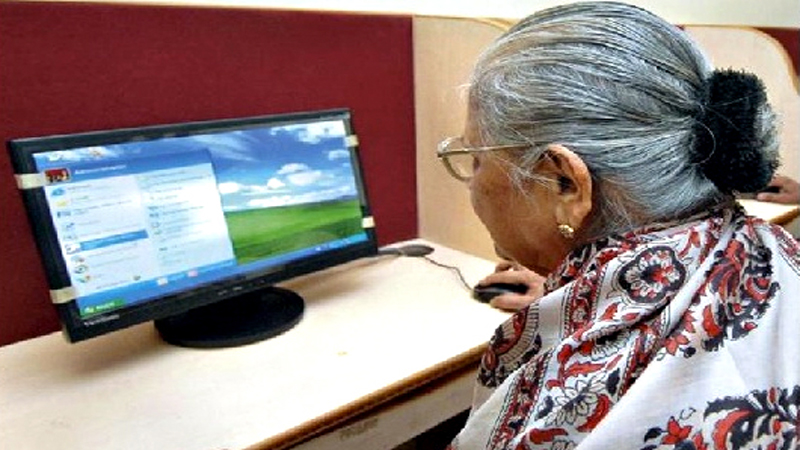
Technology should be harnessed to give people confidence to live independently, wherever they want to call home.  It has the potential to connect millions of people and build relationships that never could have been made before.  We see this already through well-established technology systems such as Facebook, Skype, YouTube, Twitter, and dozens more – yet little emphasis has been made on how similar programs can help seniors overcome the loneliness and isolation that so many of them experience.


One example of a solution that was developed specifically to address this need is Intel-GE Care Innovations™ Connect, a new solution from the joint venture between GE and Intel Corporation.  Care Innovations™ Connect is a new wellness communications tool and social networking hub designed to address social isolation in older adults.  It includes an easy-to-use digital device for the senior’s residence that offers wellness surveys that communicate back to professional caregivers, brain fitness games (e.g. trivia game, card matching game), medication compliance reminders, residential community information, and simple social networking tools.


Connect is based on a decade of senior focused research and has been rigorously user tested with seniors and caregivers.  For seniors, personalization, a friendly touch screen with large icons and text helps them quickly integrate Connect into their daily routines.  The system also includes an online interface for the professional caregiver to securely access their residents’ wellness data, enabling them to respond immediately to issues.


Care Innovations also offers a variety of other tools to help seniors live independently: the Care Innovations™ Guide, a next-generation remote health management solution that connects patients and healthcare professionals; GE QuietCare®, an advanced motion sensor technology that learns the daily living patterns of senior community residents; and the Intel® Reader, a mobile device that transforms printed text to the spoken word for those with reading-based disabilities or impaired vision.


At the heart of all these initiatives is the importance of supporting a spectrum of healthy living from wellness and independence on-the-go to managing serious chronic illnesses.  Aging must be viewed in a more positive light, and we have the responsibility to support new innovations and solutions that can help support these great generations.


Copyright ©2011 Intel-GE Care Innovations LLC. All rights reserved.  Care Innovations and the Care Innovations logo are trademarks of Intel-GE Care Innovations LLC in the United States and other countries. QuietCare is a registered trademark of Intel-GE Care Innovations LLC.  Intel and the Intel corporate logo are trademarks of Intel Corporation in the United States and other countries, used under license.  GE and the GE Monogram are trademarks of General Electric Company in the United States and other countries, used under license.  *All other third-party trademarks are the properties of their respective owners.  Any use of the trademarks of Intel-GE Care Innovations LLC (and its related companies) is prohibited without express written permission.


[3] Journal of the International Neuropsychological Society (http://tinyurl.com/3szfzkr)


Senior Nutrition and Mealtime – Video

Blog Post by Mike Brunt

In this video, the first of a five-part series, Certified Senior Advisor Mary Alexander, from Home Instead Senior Care®, discusses senior nutrition and the benefits of mealtime companionship. This series emphasizes important nutritional considerations for seniors, highlights some of the challenges seniors face when trying to maintain a healthy diet, and suggests ways to make mealtime more enjoyable.

.

Homemade Memories – Video

Blog Post by Mike Brunt

A mother and her daughter talk about a family recipe that not only followed them from holidays to birthdays, but brought them together to share memories with the ones they love.

Make Mom’s Recipe a Winner

Blog Post by Mike Brunt

Mom’s spaghetti and meatballs were always a hit at family dinners. Everyone wanted the recipe. Mom gladly shared it, along with the story of how her own mother had created the dish quite by accident when she added a wrong ingredient.

Many family recipes come with a great story. Now here’s the chance to share yours. If you’re a family caregiver, get your mom or dad’s cookbook and pull out that favorite family recipe to enter in the Homemade MemoriesSM Recipe Contest. Then tell us in a short story what makes this dish so special. Go to MealsAndCompanionship.com to learn more about the contest and how your recipe could be a winner. The contest runs from July 15 to September 15, 2011.


(Entry Submissions: July 15 – September 15; Voting Occurs: September 16 – October 7th).

Selected recipes and stories will be online as well as in the Homemade MemoriesSM Cookbook that will be available for purchase prior to the 2011 holiday season. Proceeds will go to the non-profit Home Instead Senior Care® Foundation to benefit North American seniors.

The contest is part of the Craving Companionship program, launched to help seniors thrive by staying connected socially and eating more nutritiously. Research conducted for the Home Instead Senior Care network reveals that the biggest mealtime challenge for older people who live alone is lack of the shared family experience including companionship.

What’s more, an overwhelming majority of seniors (85 percent) say that having someone to share their meals makes mealtimes more satisfying for them, according to research. In addition, nearly one-half (48 percent) say their mealtimes are more satisfying if they have someone prepare their meals.

If you are facing caregiving challenges in your family, we want to help. Please contact your local Home Instead Senior Care office for more of these resources or to schedule a no-cost in-home consultation to learn more about how we can help you and your parents. For Home Instead in Washington County, Oregon, please call 503-530-1527 or visit our interactive online brochure.


Book: “Moments This Good, The Softer Side of Alzheimer’s”

Book Recommendation by Mike Brunt

Bonnie Nester’s latest book, ”Moments this Good: The Softer Side of Alzheimer’s,” is a memoir of hope and love.  Join Bonnie as she walks beside her mother through the tangled trails of Alzheimer’s Disease. In “Moments this Good,” Bonnie shares her experiences and insights in a tender and a lovingly humorous way. This is an uplifting, encouraging read to guide others who are losing loved ones to this debilitating disease. Moments This Good gives back the humanity and dignity that Alzheimer’s tries to steal. 

A Portion of the proceeds for this book are donated to the Alzheimer’s Association.

If you would like to purchase a signed and/or personalized copy of any of her books, contact her directly.  She also welcomes any comments – she loves hearing from fellow readers: bonnie@bonnienester.com.

Publication Date: May 2008
ISBN: 9780980244601
208 Pages
26 Black & White Photos
Golden Quill Publishing

Order “Moments this Good”

Read an Excerpt
Bonnie lives in Sherwood, Oregon and is a supporter of Senior Provider Information Network. Learn more about Bonnie and her work at http://www.bonnienester.com/.

New Toolkit Helps Track Senior Medications

Blog Post by Mike Brunt 

 
Proper Medication Tracking is Vital to Keeping Seniors Healthy
You’ve just walked out of your mother’s latest doctor’s appointment and your head is spinning. The doctor wants to change the dosage on two medications, stop a third, and start a new fourth medication. Some of the medications need to be taken on an empty stomach and some with food. Some medicines your mother should take twice a day and some just in the evening. Keeping it all straight is making your head ache.
Even more importantly, however, is what can happen if you, and your mother, don’t track her medications properly. On average, seniors ages 85 and older take 34 prescriptions, including refills, per year, according to the American Society of Consultant Pharmacists (ASCP). And adverse drug reactions (ADRs) or noncompliance are responsible for 28 percent of all hospitalizations of the elderly, the organization reports.

The sheer volume of medications that most seniors are taking has the potential to create the perfect storm. Medication-related problems can cause, aggravate or contribute to common and costly geriatric problems including:

  • Depression

  • Dizziness

  • Falls

  • Incontinence

  • Insomnia

  • Loss of coordination

  • Malnutrition/dehydration

  • Memory loss

  • Psychiatric problems


Tools and Resources for Family Caregivers
Pill organizers can help track multiple prescriptions. So can the assistance of a family or professional caregiver. The Home Instead Senior Care® network offers many resources to help family caregivers stay on top of their loved ones’ medical situations.

In addition to in-home care services, Home Instead Senior Care has worked with Humana Points of Caregiving® to develop an information management toolkit and the Caring for Your Parents: Senior Emergency KitSM website to help you track medications and other important information regarding your senior loved ones’ health. This toolkit includes checklists and worksheets for medications, conditions, allergies, doctors, health advisors and important documents.

If you are facing caregiving challenges in your family, we want to help. Please contact your local Home Instead Senior Care office for more of these resources or to schedule a no-cost in-home consultation to learn more about how we can help you and your parents.

Most Baby Boomers Lack A Plan To Care For Parents

By Janice Lloyd, USA Today, June 17, 2011
Link to Original Article

A majority of Baby Boomers say they are likely to become caregivers for their parents, but only half can name any medications their parents take, a new survey shows.

The survey of 600 adults ages 45 to 65, conducted for the Home Instead Senior Care network, also found:

  • 31% don’t know how many medications their parents take.
  • 34% don’t know whether their parents have a safe deposit box or where the key is.
  • 36% don’t know where their parents’ financial information is located.


“The majority of caregivers we work with have done no advance planning,” says Jeff Huber, president of Home Instead Senior Care, a company that provides non-medical care services. “It is not important until it’s urgent. So much stress and uncertainty down the road can be prevented.

“Lack of planning can lead to serious complications when decisions need to be made quickly, says palliative care nurse practitioner Mimi Mahon, an associate professor at George Mason University in Virginia. “It’s vitally important to plan ahead and have these conversations with parents, or families can act out of fear and make mistakes when emergencies arise.

“Prescription drugs are of particular concern. In the survey, 49% couldn’t name a single drug their parents took. Ask parents about their medications and, if necessary, do research, experts say. Find out the dose, what it’s for, who prescribed it and why. People 65 and older account for about a third of all medications prescribed in the U.S., according to the National Institutes of Health, and older patients are more likely to have long-term and multiple prescriptions, which could lead to unintentional misuse.

“It’s kind of a never-ending process for caregivers,” says Sandy Markwood, head of the National Association of Area Agencies on Aging, part of the Department of Health and Human Services. “It gets further complicated when there is more than the family practitioner. A parent might have several specialists. It’s a lot for a caretaker to keep up.”

Markwood says the Administration on Aging, also under HHS, has been encouraging better record-keeping by seniors and stronger communication between seniors and caretakers since Hurricane Katrina. “Then you had a situation when seniors were evacuated without their medications and no one knew what medications they were on,” Markwood says. “Doctors had to start from scratch.”

One must-have answer for caretakers: What drugs can parents go without and which ones must be taken on schedule. For instance, blood pressure and anti-depressant medications cannot be missed, Mahon says.

The bottom line, she says, is being a staunch advocate for your parents’ health care starts with “having conversations and putting plans in place.”


Resources are available online

 The Home Instead Senior Care network’s Senior Emergency Kit is free and available to download (caregiverstress.com). It includes sheets for listing contacts and phone numbers, medications, allergies and conditions.

Senior Emergency Kit

Blog Post by Mike Brunt

Research conducted for the Home Instead Senior Care network® tells a striking tale of how family caregivers do not feel they are prepared for a senior care emergency.

Less than half (47 percent) say they are knowledgeable about their parents’ medical histories. And approximately half (49 percent) are not able to name any of their parents’ medications. Furthermore, 36 percent of those future caregivers don’t know where their seniors’ financial information is located.

What are your thoughts about how family members of aging loved ones can prepare themselves for a senior care emergency?

Helpful Resources:
Use the web sites below to help get yourself prepared for that emergency phone call that so many adult children and family caregivers dread. 

www.SeniorEmergencyKit.com

www.healthrecordresources.com